
TU Delft

data refinery lab

scroll or drag to explore
Working with Drawing data

Our mission.

The Data Refinery Lab at TU Delft's Faculty of Architecture and the Built Environment is a cross-departmental hub for architectural data literacy and open knowledge in the built environment. Dedicated to rethinking the role of data in architecture, planning, and heritage, the lab addresses practical aspects of data structuring, annotation, and processing while also tackling foundational issues such as data ownership and ethics. Our mission is:

Equip

architects, planners, and researchers with the data skills and critical awareness needed to bridge domain expertise and data science.

Develop

transparent, reproducible, and scalable data workflows for architecture and the built environment.

Unlock

the value of diverse built-environment data — including drawings, images, texts, numerical datasets, and simulation outputs.

Our vision.

Digitalisation and artificial intelligence are transforming how we understand, design, and manage the built environment. As data becomes central to research and practice, the challenge is no longer simply generating more information, but refining data into meaningful knowledge that can be understood, shared, and applied. The Data Refinery Lab envisions a future where data and AI augment human intelligence, strengthen collaboration, and empower better spatial decisions. We pursue this vision through three interconnected shifts:

Impact on Research

From big data to visual and spatial intelligence.

Impact on Education

From individual insights to deep collective learning.

Impact on Society

From detecting patterns to shaping environments.

How we refine data.

Our data refining process follows four steps — we help with each.

Acquire

Data intake. We help you securely store your raw data and verify ownership, processing rights and sharing permissions — so your data handling complies with EU legal and ethical requirements.

Build

Transform raw data into a structured, machine-readable dataset. Images, videos, text, documents or drawings are cleaned, organised and checked for duplicates or gaps — ready for analysis.

Comprehend

Explore patterns and meaning within the data. Through visualization, analytics and annotation — by people, AI, or both — we reveal relationships and hidden information, turning complex data into knowledge.

Deploy

Make the refined dataset accessible for use and reuse. We help you document, publish and share it through the right platforms — maximising its long-term value through discovery and reuse.

Research Projects.

From analysing architectural collections to developing AI-assisted workflows for design research, our projects explore how data can expand the way we study, design, and understand the built environment.

Start a project

Interested in working with the Data Refinery Lab? Start by sending us an email with a short description of your research idea, the type of data you are working with—such as drawings, images, or documents—and how your data is currently organised. If we decide to collaborate, you will lead the project by defining the research direction and driving its progress. The Data Refinery Lab supports you by helping shape the data questions, define a realistic project plan, and develop the data workflows or custom tools needed to support your research. To make the collaboration sustainable, projects should already have funding or be part of a larger funded research initiative.

Please note that the Data Refinery Lab works with digitised (scanned) and born-digital datasets. We focus on refining and analysing digital data and do not provide digitisation or archival services.

Email the lab →

Lab Activities.

From informal conversations to hands-on workshops and community events, our activities provide a space for learning, experimentation, and knowledge exchange, bringing together researchers, students, and practitioners to explore data and AI in the built environment.

Previous workshops — a flavour of what can happen:

Data Annotation Workshop: Measuring Agreement in Urban Quality Assessment

This workshop explored how to measure agreement in subjective evaluations of urban quality based on image data. Through dataset curation, annotation, statistical analysis, and visualization, participants examined how different spatial and design factors shape perceptions of urban quality of life. Organized as part of the Inhabiting Data MSC2 studio, run by the Design, Data and Society group in collaboration with the Data Refinery Lab.

AI Experiment: Testing ChatGPT's Spatial Reasoning Ability

This workshop explored how effectively AI models such as ChatGPT can understand and reason about spatial concepts. Participants designed and tested prompts across five spatial reasoning layers, evaluated AI responses, and reflected on the strengths and limitations of large language models. Organized as part of the Inhabiting Data MSC2 studio, run by the Design, Data and Society group in collaboration with the Data Refinery Lab.

Data Carpentry Workshop: Creating Reusable Educational Datasets

This workshop introduced participants to the principles of FAIR data, Open Science, and responsible data stewardship through the creation of a collective dataset from student work. Participants learned how to document, curate, and prepare their digital products for long-term reuse while considering ethical, legal, and copyright implications. Organized as part of the City of Innovations MSC2 studio, run by the Complex Projects Group, in collaboration with the Data Refinery Lab.

Contact.

Reach out

Whether you're a student, researcher, or practitioner, we're always happy to discuss ideas, projects, and collaborations. Get in touch by email.

datarefinerylab-bk@tudelft.nl

Visit us

Feel free to walk in whenever someone is in the room, or reach out by email to make an appointment.

Room 01.Oost.410, Building 8
Faculty of Architecture & the Built Environment, TU Delft
Julianalaan 134, 2628 BL Delft

Open hours

Monday – Friday, 09:00 – 17:00
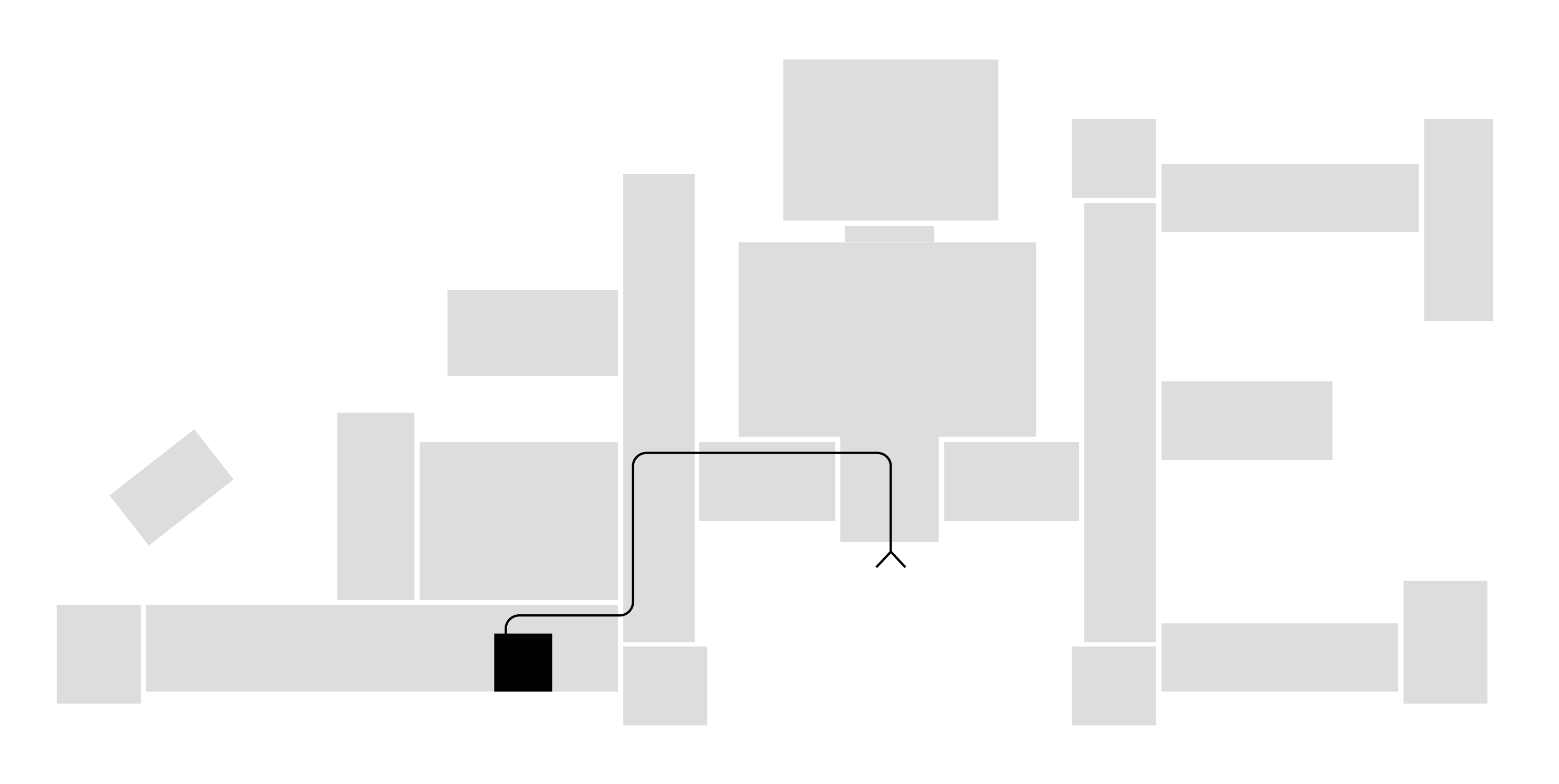
Map of the Faculty of Architecture (Bouwkunde), with the building marked and the route to Room 01.Oost.410

Team.

Core team

Ir. Marija Mateljan

Co-Lead — Architecture
m.mateljan@tudelft.nl

Dr. Seyran Khademi

Co-Lead — Computer Vision and AI
s.khademi@tudelft.nl

Dr. Ali Khatami

Data Engineer
a.khatami@tudelft.nl

Core collaborators

  • Agostino Nickl
  • Shaad Alaka
  • Casper van Engelenburg
  • Fatemeh Mostafavi

Advisory board

  • Prof. dr. Georg Vrachliotis
  • Prof. ir. Kees Kaan